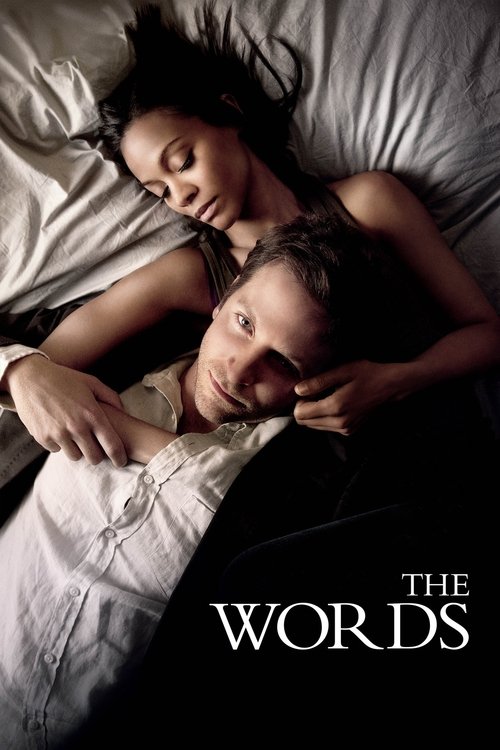
The Words
"There's more than one way to take a life."
Revenue
$13,231,461
Budget
$6,000,000
Where to Watch
Stream in high quality

Global Revenue
$13,231,461
Detailed Plot
Trailer



Production Stills & Gallery


User Reviews
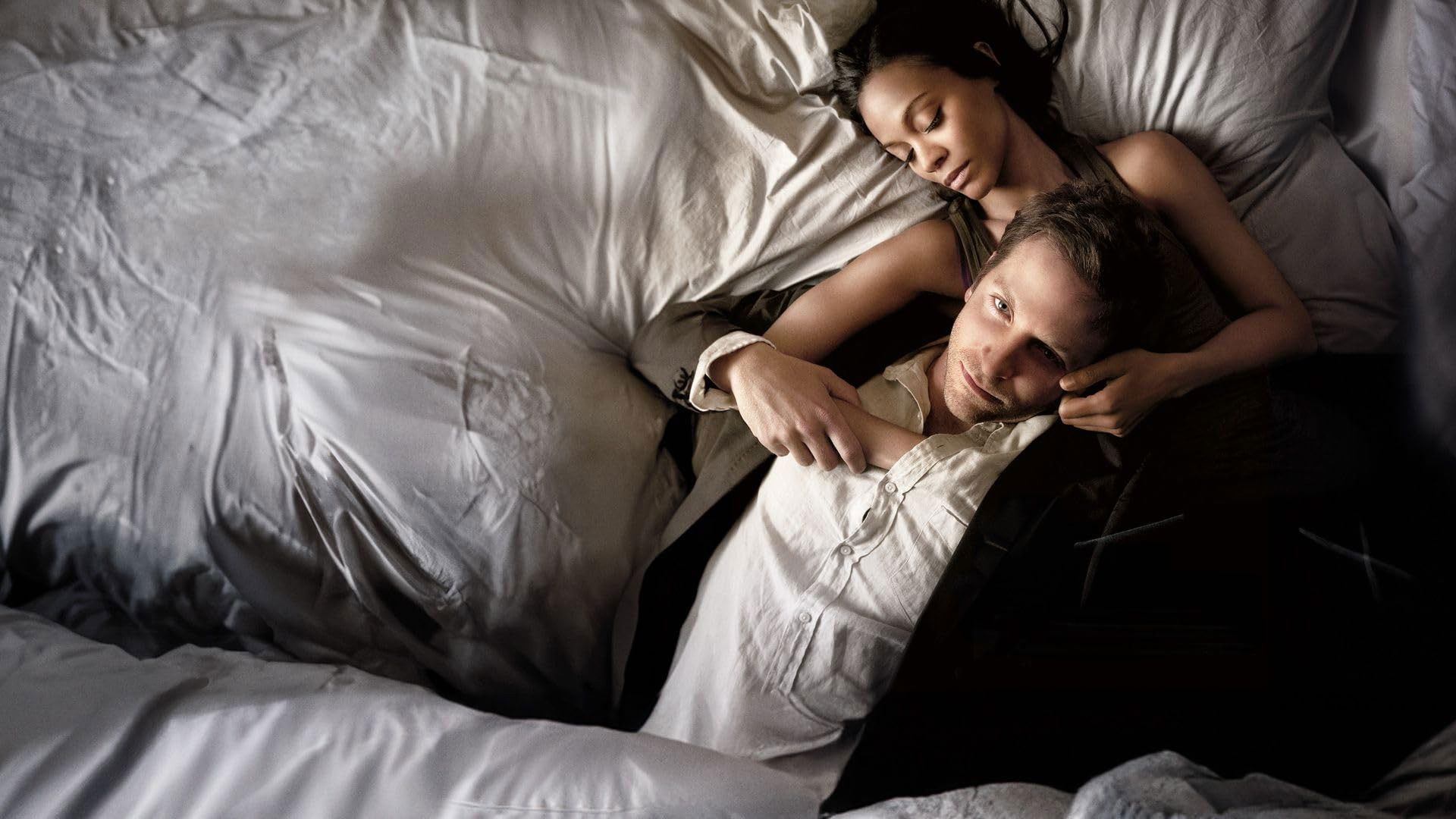
The Words obliquely poses the question, what would have happened if someone had found the suitcase full of Papa Hem’s manuscripts that Hadley lost at the Gare de Lyon, and published the con-tent as his own work? Unfortunately, the answer is: not much. The problem, or one of them, is that the movie establishes too long a period of time between the loss of the manuscript — shortly after the end of WWI — and its publishing — presumably, the then-present day. As we all know, Hemingway eventually got over the incident and went on to become arguably the greatest author of the 20th century, essentially rendering the film’s premise moot. Co-directors Brian Klugman and Lee Sternthal’s script, however, conveniently has its homologous character, played by Ben Barnes as a Young Man and Jeremy Irons as an old nurseryman, give up writing forever following his soon-to-be ex-wife’s misplacement of his text. Needless to say, this is the least hemingwayesque thing to have done. Here’s another couple of problems. Wannabe writer Rory Jansen (Bradley Cooper) finds the briefcase in an antiques store in Paris, and buys it; lo and behold, not only is the manuscript still inside, un-touched — from the Gare de Lyon in the 1920s to an antiques shop in the 2010s, the briefcase sure-ly must have exchanged hands often (now, there’s you film), and yet it didn’t occur to anyone to rifle through it on the odd chance that it might contain something of value —, but Rory actually leaves it untouched ("He retyped every word as it was written on those pages. He didn't change a pe-riod, a comma, or even correct the spelling mistakes"), which doesn’t stop from going directly to the printing press. It’s at this point that one yearns for a movie like Genius, about famed editor Max Perkins — who worked with the likes of Scott Fitzgerald, Thomas Wolfe, and Hem himself; even an Ernest Hemingway at the peak of his powers wouldn’t crap out a best-seller just like that, and it certainly wouldn’t hit bookstore shelves without undergoing extensive rewrites and editing work. But I digress. The Old Man (who, again, lacks the testicular fortitude of both Papa and the character to which his moniker is a reference) recognizes his work and confronts Rory — but don’t expect anything along the lines of Secret Window; the Old Man "just thought [Rory] should know the story behind these stories in case anyone was to ask." This comes right after the Old Man admits "I don't know how you did it. To be brutally honest, I don't care." But if he doesn’t care, and he clearly ne-ver did, why should we? Why even bother? The whole thing becomes even less urgen when we consider that the Old Man’s tale is only a story within Rory’s story, which in turn is a story within another story: the latest book by novelist Clay Hammond (Dennis Quaid), who is discussing it with literary groupie Daniella (Olivia Wilde). Enough to make you wonder if there’s a point to any of this drivel, and if so, what the hell it is. PS. That Rory’s adventure is a fictional yarn — which might be based on events in Hammond’s life, and then again it might not — could explain that he and the Old Man live in a world where Hemingway existed (a copy of The Sun Also Rises makes a cameo, being read by the Young Man), but neither ever stops to consider for the briefest moment that their little mix-up is eerily similar to one of the best known anecdotes in Western literature.