
Miroirs No. 3
Revenue
$827,346
Budget
Not Disclosed
Where to Watch
Stream in high quality


Global Revenue
$827,346
Detailed Plot
Trailer






Production Stills & Gallery





User Reviews
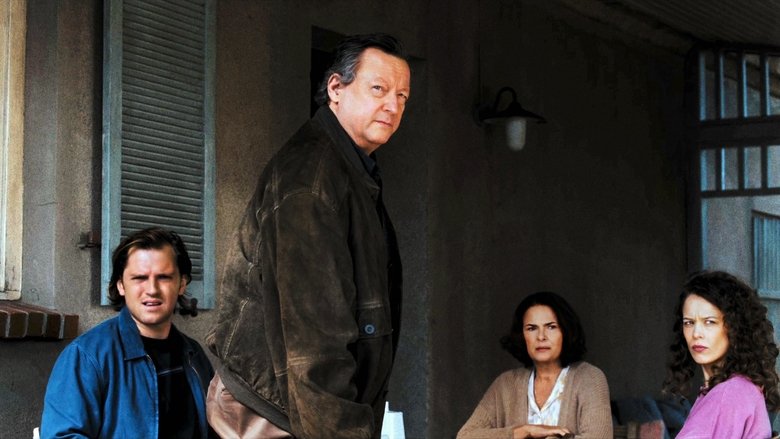
For what it’s worth, some movies are just plain forgettable. That’s especially true when a picture’s narrative is driven by a slew of ambiguities, leaving viewers wondering what the film is actually about. And that approach, for whatever purpose it supposedly serves, characterizes many of the works of writer-director Christian Petzold, who employs it once again in his latest offering. Laura (Paula Beer), a listless, ostensibly withdrawn music student at a Berlin university, embarks on a weekend getaway to the German countryside with her partner, Jakob (Philip Froissant), and two friends (Hendrik Heutmann, Victoire Laly). But, while on a stop in their journey, Laura says she’s not feeling well and would like to return home, a source of noticeable irritation for her boyfriend. He brusquely agrees to drive her to a nearby train station, but, while on the way there, the couple is involved in a horrific car accident in which Jakob is killed. Laura, fortunately, only suffers minor injuries, a revelation that surfaces when she’s found by a mysterious middle-aged woman, Betty (Barbara Auer), who lives in a nearby rundown country home. Laura turns down an offer to go to a hospital for further care but asks, inexplicably, if she can stay with Betty while she recovers, a request that strikes her rescuer as unusual but to which she agrees. Laura thus begins convalescing at the stranger’s home, a relationship that surprisingly benefits both parties. But many questions arise that remain sufficiently unanswered, especially when Betty’s estranged husband, Richard (Matthias Brandt), and son, Max (Enno Trebs), enter the picture after what appears to be a lengthy absence. To say more at this point would reveal too much, but suffice it to say that the story ambles along somewhat aimlessly while strategically dropping hints about what may be going on behind the scenes. In actuality, the big (though questionably anticipated) reveal that eventually emerges isn’t particularly difficult to figure out beforehand. But, despite its long-awaited disclosure, a plethora of ancillary unexplained matters remains that are never adequately addressed (e.g., what’s behind Laura’s initially despondent attitude, why does she want to stay with Betty when she was originally so anxious to return home to Berlin, how and why did Betty become estranged from Richard and Max, to name just a few). And those oversights are especially strange given the picture’s comparatively short 1:26:00 runtime. In a nutshell, this all speaks to an inherently thin, underdeveloped plot that could have easily been elaborated upon for greater clarity without turning into an unduly long release. Why that didn’t happen truly escapes me, though it’s also not surprising in light of Petzold’s repertoire. That, however, is also what ultimately makes “Miroirs No. 3” such an eminently forgettable film, one that will likely disappear from the cinematic radar not long after its current release. Truthfully, though, there’s not much to recommend here, so this is one that can readily be skipped without missing much.