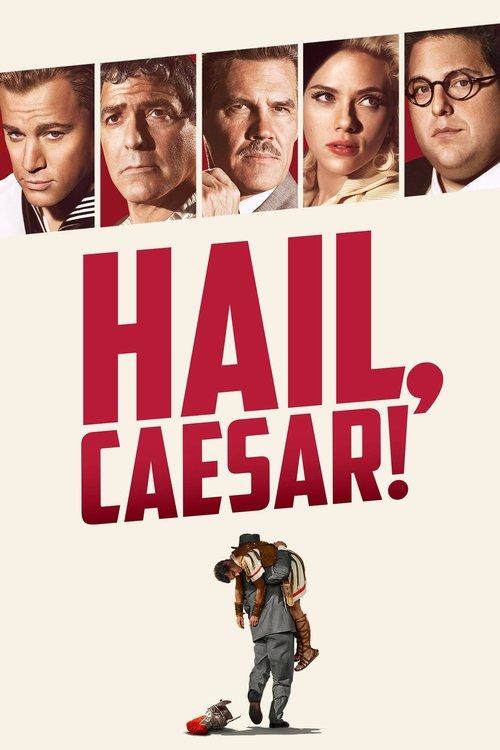
Hail, Caesar!
"Lights. Camera. Abduction."
Revenue
$63,647,656
Budget
$22,000,000
Where to Watch
Stream in high quality
Global Revenue
$63,647,656
Detailed Plot
Trailer





Production Stills & Gallery





User Reviews
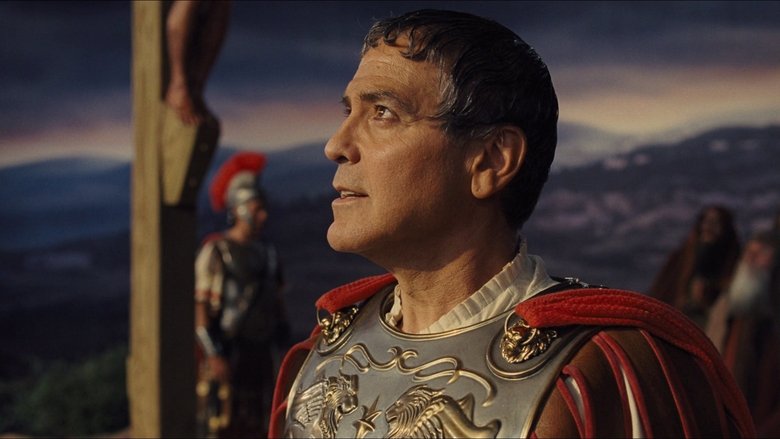
There’s a scene halfway through the film when Hobie Doyle (Alden Ehrenreich), a Western B-movie star, is cast in a fancy melodrama helmed by Laurence Laurentz (Ralph Fiennes). Doyle is hopelessly out of his element, hobbling about in his new suit–the switch was the studio’s idea in an effort to broaden Doyle’s appeal, much to Laurentz’s dismay. It’s not long before the two engage in a back-and-forth, Laurentz trying to get Doyle to pronounce “Would that it ‘twere so simple”, and Doyle trying desperately to appease Laurentz. After a lengthy exchange, both are left exacerbated. Much later in the film, we catch a glimpse of the final version, where Doyle and Laurentz compromise with a much simpler: “It’s…complicated.” Complicated is exactly what’s at the heart of this situation. Laurentz’s increasing frustration with this obvious miscast and Doyle’s confusion may serve to fuel the slapstick comedy on exhibit, yet this scene alludes to so much more. It’s the inner mechanics of Hollywood, where directors are mere technicians and actors are props, all to be assigned and managed. It’s the clashing of proud classical Hollywood traditions of entertainment and escapism with the dreaded rise of message films and sophisticated art. It’s the contradictory nature of unfettered creativity with capitalism and consumerism, where compromise–and perhaps communism–seems to be the only way out. This is just one slice of the screwball nature that is the Coen Brothers’ latest comedy, Hail, Caesar! There’s also a kidnapped Roman soldier, Baird Whitlock (George Clooney at his dimmest and greatest), a handsome sailor (Channing Tatum) and a beautiful mermaid (Scarlett Johansson). All opportunities–that the Coens gladly take–to simultaneously demonstrate the power and influence of cinema, while mocking its sense of self-importance. Each scene is allowed to play out, Channing Tatum and his homoerotic musical number or Scarlett Johansson’s hypnotizing aquatic acrobatics. It’s not only an homage films of the Golden Era, but a demonstration of the mechanics that make film such an appealing medium. The Coen Brothers have a firm grasp on the allure behind each piece, using the acting, staging and costumes to propel Hail, Caesar! forward. It’s a simple concept–use filmmaking techniques to advance a theme and narrative, but by prioritizing these lengthy sequences over traditional narrative pacing or dialogue, the Coen Brothers give room for these fundamental concepts to breathe and thrive. It’s all threaded together through Josh Brolin’s character, Eddie Mannix, studio fixer. And there’s a lot that needs fixing: a pregnant star, a discontent director, communism, threat from the future–the usual. It’s a packed schedule, and the film follows suit with a similarly hectic pacing. An array of symbols, innuendos and subversions are thrown at the viewer: Capital Studios butting with Das Kapital, Mannix being offered a role at Lockheed where they tout a more stable industry– weapon-making, or Whitlock staring at the audience as he addresses God. It borders on bombastic, but there’s just too much wit, and heart, here to discredit any of the ideas presented–fleshed out or not. Hail, Caesar! doesn’t break new ground in the increasingly crowded sub-genre of Hollywood-on-Hollywood, but it hits a Goldilocks concoction between inside baseball cynicism and endearing love letter. Though all these antics, the Coen Brothers argue, quite convincingly, that everything in film matters, while also making a case for the futility and hollowness of anything produced on the grounds of Hollywood. So is this a nihilistic shrug at our attempt at defining and contextualizing or a fierce exhibition of the inherent power of Hollywood where life imitates art? Well, as Doyle would try to tell you, “Would that it ‘twere so simple.”