Amache: An American Injustice
⭐ 0.02024-10-0127 minReleased
Revenue
Not Disclosed
Budget
Not Disclosed
Where to Watch
Stream in high quality
In Theaters / VOD
Global Revenue
Not Disclosed
Detailed Plot
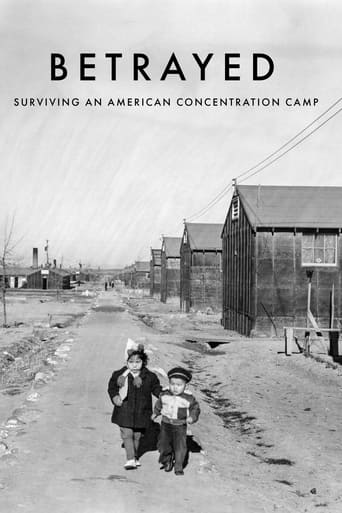
During World War II, about 120,000 people of Japanese descent were forcibly relocated and incarcerated in 10 concentration camps in the United States, operated by the War Relocation Authority (WRA), mostly in the western interior of the country. About two-thirds were U.S. citizens. These actions were initiated by Executive Order 9066, issued by President Franklin D. Roosevelt on February 19, 1942, following Imperial Japan's attack on Pearl Harbor on December 7, 1941. About 127,000 Japanese Americans then lived in the continental U.S., of which about 112,000 lived on the West Coast. About 80,000 were Nisei ('second generation'; American-born Japanese with U.S. citizenship) and Sansei ('third generation', the children of Nisei). The rest were Issei ('first generation') immigrants born in Japan, who were ineligible for citizenship. In Hawaii, where more than 150,000 Japanese Americans comprised more than one-third of the territory's population, only 1,200 to 1,800 were incarcerated.
Internment was intended to mitigate a security risk which Japanese Americans were believed to pose. Military authorities justified exclusion by claiming that an "unascertained number" of potentially disloyal Japanese Americans remained on the West Coast and that immediate separation between loyal and disloyal was impracticable. Military necessity was interpreted broadly to include not only direct defense concerns, but also civilian morale and broader wartime considerations. The implementation of internment developed in stages, progressing from asset restriction measures to large-scale removal and incarceration. The scale of the incarceration in proportion to the size of the Japanese American population far surpassed similar measures undertaken against German and Italian Americans who numbered in the millions and of whom some thousands were interned, most of these non-citizens. Following the executive order, the entire West Coast was designated as a military exclusion area, and all Japanese Americans who were living there were taken to assembly centers before they were sent to concentration camps in California, Arizona, Wyoming, Colorado, Utah, Idaho, and Arkansas. Similar actions were taken against individuals of Japanese descent in Canada. The internees were prohibited from taking more than they could carry into the camps, and many of them were forced to sell either some or all of their property, including their homes and their businesses. Inside the camps, which were surrounded by barbed wire fences and were patrolled by armed guards, the internees frequently lived in overcrowded barracks which contained minimal furnishings.
In its 1944 decision Korematsu v. United States, the U.S. Supreme Court upheld the constitutionality of the removals under the Due Process Clause of the Fifth Amendment to the United States Constitution. Although the Court upheld exclusion under wartime necessity, the decision acknowledged that ancestry based distinctions would ordinarily conflict

Production Stills & Gallery

View HD